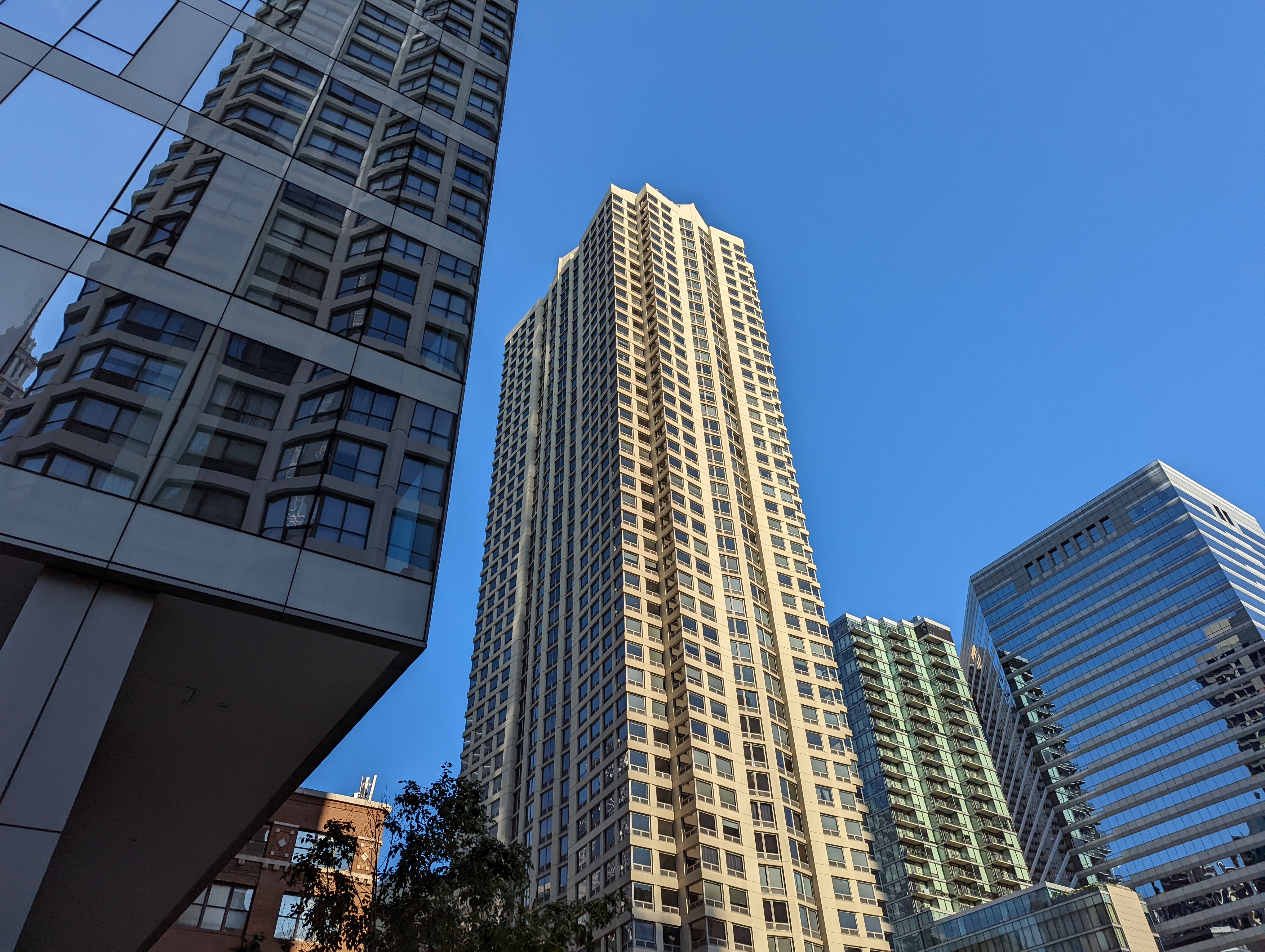
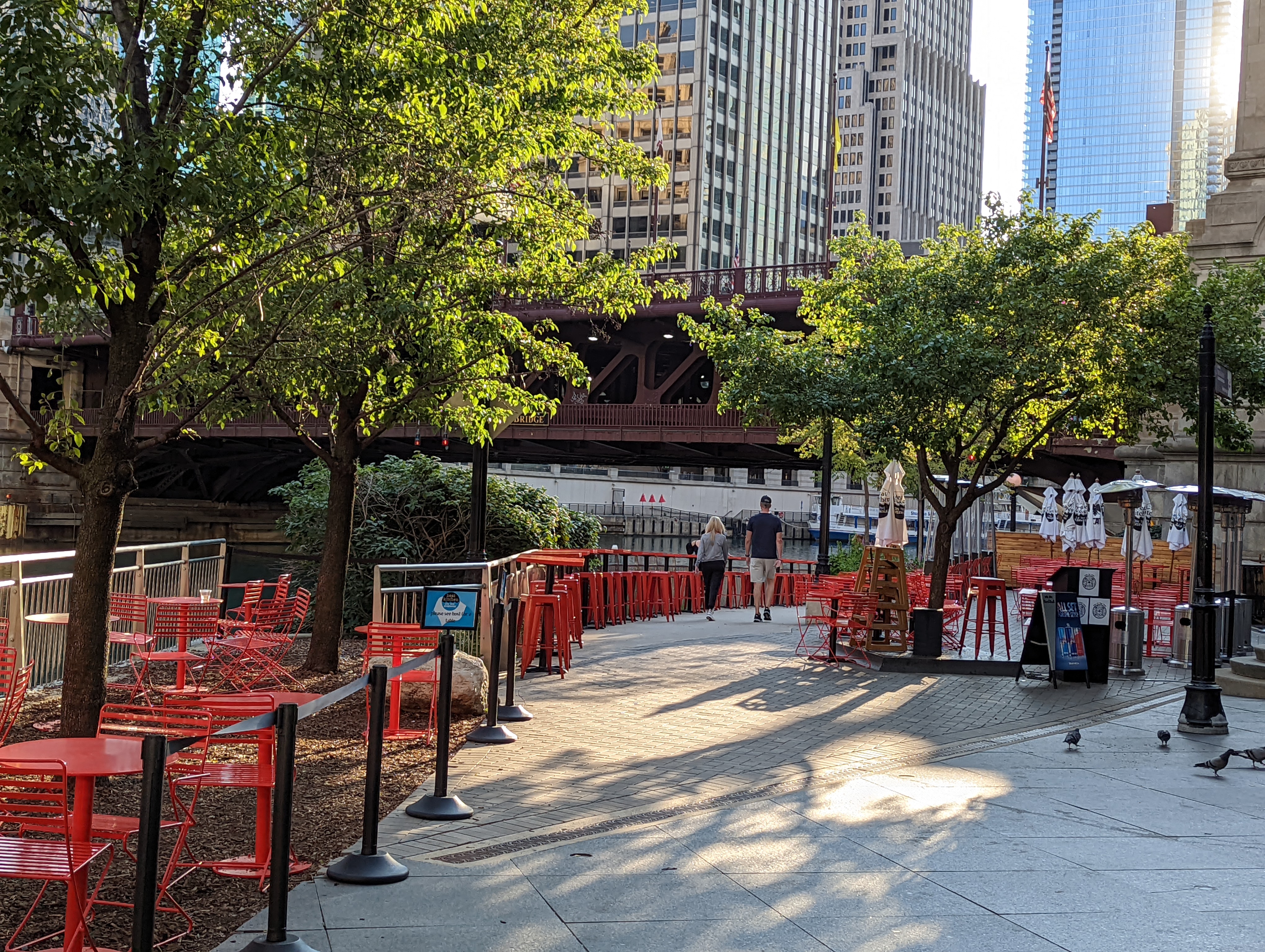
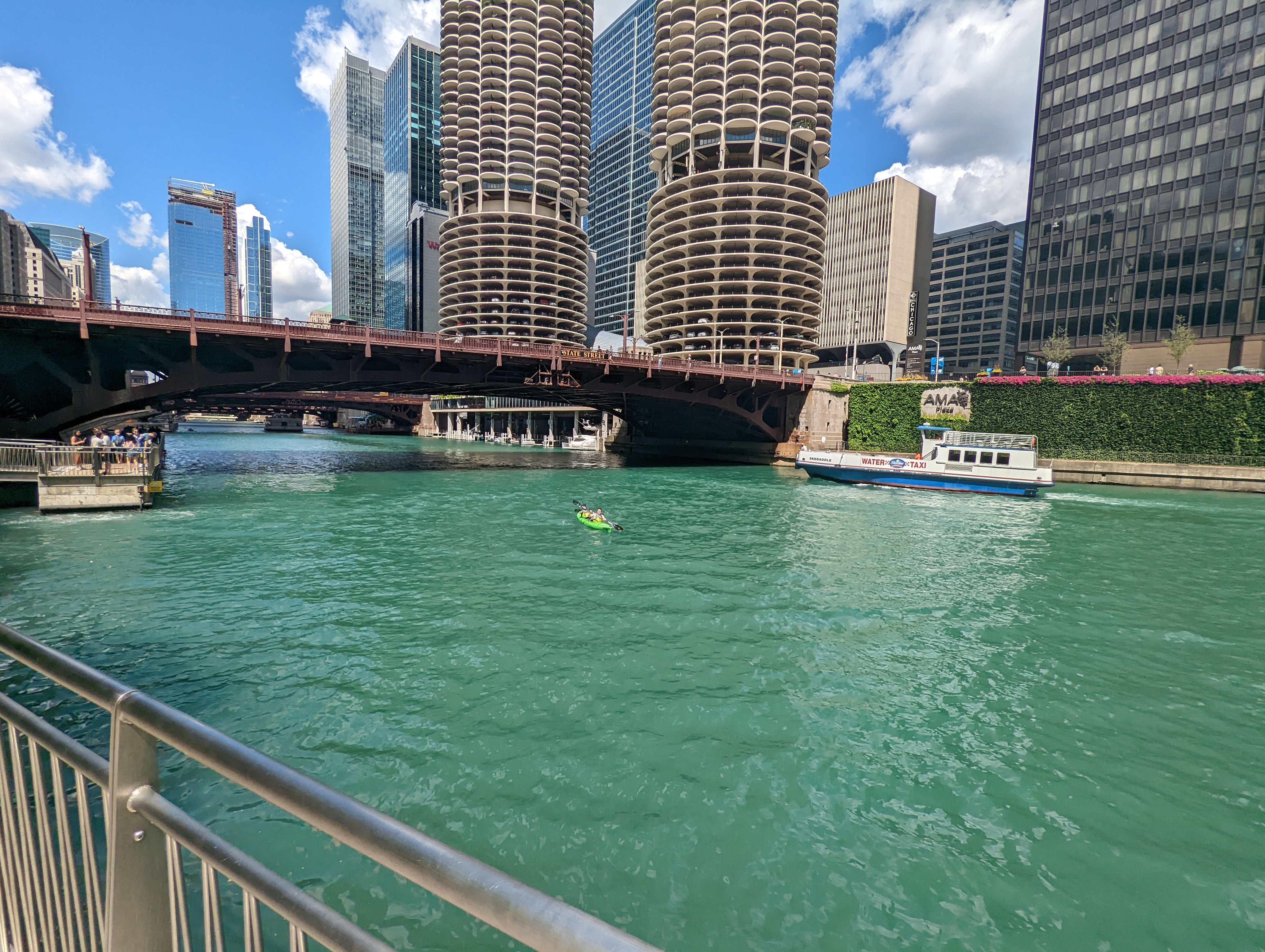
I worked at Marina City for the Chicago RTA (Regional Transportation Authority) 1980-82. The area immediately north of it was pretty dead, although you could see it had great potential. Now it is filled with new high rise housing, and with huge numbers of restaurants. Part of Clark Street is closed off to traffic with the restaurants into the street. The area is vibrant. The area along State Street is marginal, but likely headed for substantial urban redevelopment.
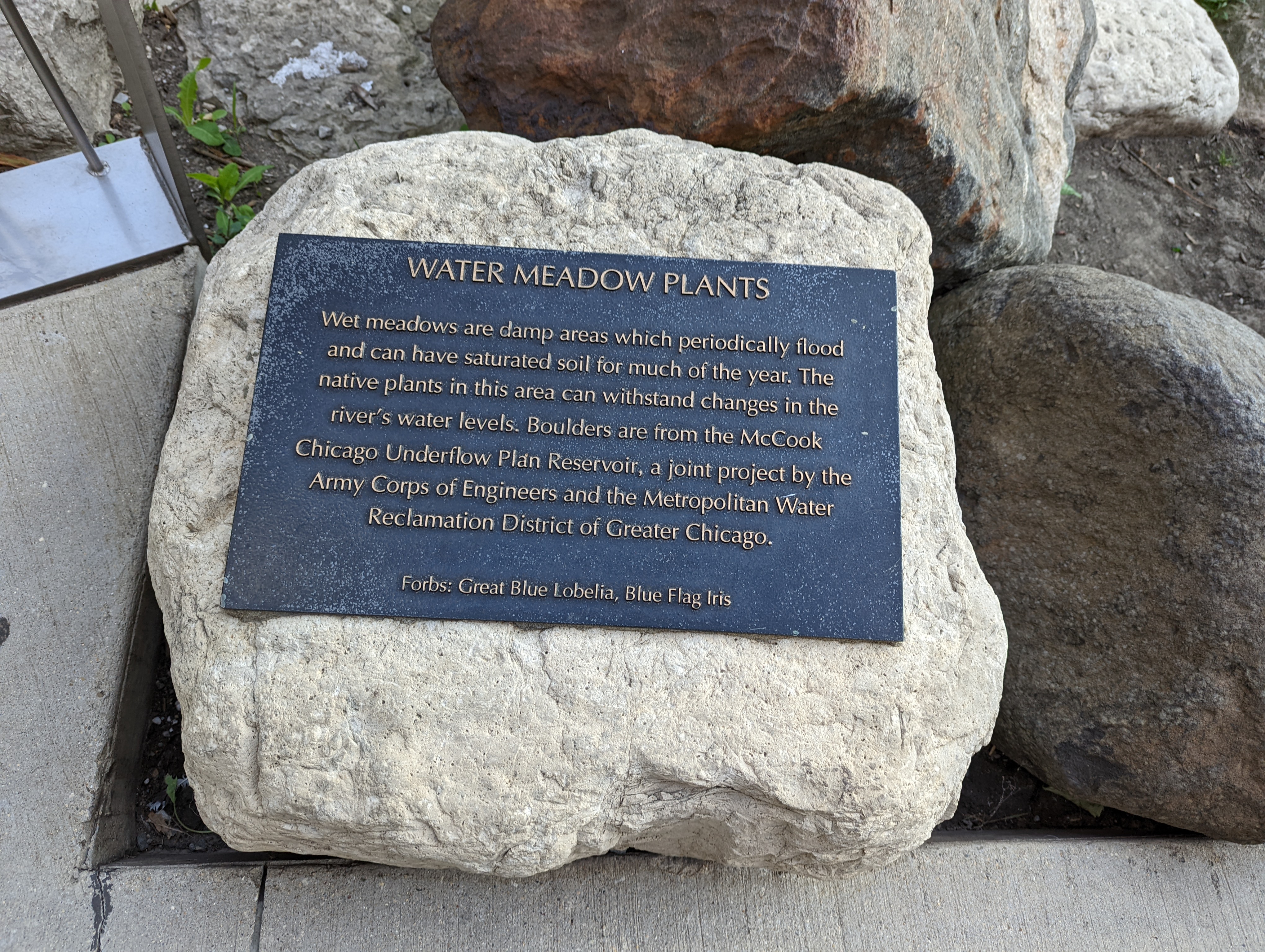
Our country did a great job cleaning up our water and air. Our nation embarked on a huge multi year effort to make all of our rivers, streams, and lakes suitable for fishing and swimming. This effort began when I first started as a city planner in 1973. It took many years of effort. Our air and water are not perfect but they are much better then in the good old days.
I can remember how Mayor Daley was laughed at when he said we would be fishing in the Chicago River. Now we can. And what used to be an open sewer is now a tremendous asset for the City and State.
I can remember canoeing on the DesPlaines and Chicago River and Cal Sag channel. It was a disgusting open sewer. Our air quality was also bad, back in the day when we used coal to heat our homes and power our industry. Flying into the city you could see it encased in an ugly black cloud, depending on the wind.
I was working as the Planning Director for Will County just south of Chicago and Cook County in 1975. The Chicago River drained into the Des Plains and Illinois Rivers through our county and it was an open sewer. My department was paid $200,000 of Federal funds to work on the project. We needed to vastly upgrade our sewer plants and also reduce pollutants from farm and urban areas. A substantial amount of ordinane revision and planning was required.
One of our efforts was to publicize and win public support for the effort. One of my ideas was to have a big event in Joliet. I planned to jump in the River, and swim from one side to the other to show how great it would be once we were finished. My environmental expert suggested that I talk to the health department first. They described what they did with someone who fell into the river, including scrubbing every orifice with alchohol and numerous innoculations. I skiped the river swim idea.
We also spent time with citizens who thought it would be much better to build swimming pools and leave the rivers filthy. We won that argument.
Our water and air quality is now much better. We can all be proud of our successful efforts to substantially improve our environment
The murder rate in Chicago is of great concern. People are convinced that it is getting much worse.
Any murder is bad, but one has to remember that the media reports awful things day after day. Reports of horrific crimes rivets peoples attention and gets them to read the paper / watch the network. And it is good for politics if one party can convince the people that the world is going to hell and that it is the fault of the other party who is soft on crime.
A look back in history shows that the murder rate in Chicago was considerably higher some years ago. It is also not nearly as high as some other major cities.
The logical argument will not work for most people. They watch criminal news every day, over and over, and they know it is getting much worse.
Electric interurbans are a kind of cross between streetcars and railroad. A belt of lines was partially contructed around Chicago.
Joliet and Plainfield were connected in 1903, and extended in 1904 to Aurora and to Chicago Heights in 1909. The lines became unprofitable and were abandoned in the 1920's.
The interurban was an electric railway that was important in the eastern half of the United States from about 1890 to 1925. Interurbans provided passenger service between cities and towns. Interurbans were a cross between a streetcar and a train. There were 15,500 miles of interurban rail in the US in 1915. Interurbans in the Chicago region included the Chicago North Shore and Milwaukee Railroad (North Shore Line), the Chicago Aurora and Elgin Railroad, and the South Shore Line. The South Shore Line that services Chicago to South Bend is one of the last operations still running in the US that began life as an interurban. It still operates in Michigan City, Indiana down the middle of a street like a street car. The equipment is now modern electric rail equipment.
The South Shore Line has flag stops. Back in the good old days you would flag a train and it would stop and pick you up. I did this at Calumet Harbor, a desolate spot with no sign of any kind of train station. I simply waived my hand and the seven car train stopped from 70+ miles per hour. I ran to the train and hopped off and off we went. People were surprised to see the train stop to pick me up. At night people would light a newspaper so the train would know that a passenger wanted them to stop. Now flag stops have a "push button located in or near the shelter to activate strobe light to signal train to stop. Please push button at least 5 minutes before scheduled departure time of train. Strobe light will turn off automatically after 10 minutes. Passengers should remain visible to engineer when standing at platform. There is no strobe at McCormick Place or 63rd St."
Comparing electric interurban railways and "steam railroads". The three major interurbans entering Chicago were not typical interurban lines, enabling them to survive well beyond the 1930's, when most interurban lines were abandoned.
These three major interurban lines entering Chicago were once controlled by Samuel Insull, who also controlled various electric companies including Chicago's Commonwealth Edison, along with other interurban lines in Indiana, and the Chicago Rapid Transit Co.
Insull acquired control of the Chicago North Shore & Milwaukee Railroad Co. in 1916, the Chicago Aurora & Elgin Railroad Co. in 1926, and the Chicago South Shore & South Bend Railroad in 1925. Insull resigned from control of all companies in 1932.
MORE TYPICAL INTERURBAN LINES
The more traditional interurban lines were more local in nature, and were basically extensions of city streetcar lines into the country, and on to other cities. Such lines typically ran alongside country roads, which generally were not paved at the time. But the paving of such roads in the 1920's and 1930's made the local interurban lines obsolete, with buses able to do the job more economically.
The first local transit routes in Chicago's suburbs were electric railways, including streetcar and interurban lines. Nearly all of these routes were replaced with buses during the 1930's, evolving to today's Pace bus system.
Local interurban lines did once extend beyond the Chicago area into northern Illinois. But outside the 6 county Chicago metropolitan area, public transit agencies were never approved, and local and interurban public transportation disappeared entirely.
Beyond the Midwest, the development of interurban lines was generally quite fragmented, except in the densely populated northeastern United States, where many local electric railways existed and interconnected.
The interurban industry is one of the most unsuccessful industries to ever exist in America. Included are misconceptions and myths, and what really happened to interurban transportation.
Jump to Power collection by rolling stock – Most interurban cars and freight locomotives collected current from ... An example of this was the Chicago, Aurora, and Elgin where a ... AC transmission lines, and AC/DC conversion systems.
When one thinks of an electric interurban railway, one usually thinks of the ChicagoSouth Shore and South Bend Railroad (South Shore Line), generally ...
The Chicago North Shore and Milwaukee Railroad, an electric interurban rail linethat carried passengers between Milwaukee and downtown Chicago, shut ...
Jul 14, 2007 – A list of electric interurban railways in the US that survived until ... to Wisconsin, using a series of connecting interurban lines. ... 1957, Chicago, Aurora & Elgin, Illinois, Third-rail power; used 'L' tracks to reach Chicago's Loop ...
We invite you to join the Shore Line Interurban Historical Society and explore First & Fastest ... in what is now known as the Chicago Hub Network of Amtrak, and our special publications. ... Want to find out about our new electronic publication?
Winnetka's “North Shore Line” Electric Inter-urban Service. Gazette ... Fifty years ago, an inter-urban, electrified railroad known as the Chicago, North Shore, and ...
The electric interurban industry in Texas totaled nearly 500 miles, the second ...About 70 percent of the mileage was in the Dallas-Fort Worth area, where electric lines... LeRoy O. King (Chicago: Central Electric Railfans' Association, 1982).
By 1910 a network of interurban electric railways connected many of the cities ... to the Loop over the Chicago Elevated Railway's Northwestern line until 1919.