Mount Chicago

The Chicago region needs a mountain.  Our Lakefront is beautiful, but our topography is simply too flat and uninteresting. The following is an outline on how to develop a mountain. (All right, it would only be a bill hill, but it is better than no hill at all!)
 
A major gateway to Chicago and the southern suburbs is located where 130th Street intersects Interstate 94. The area is a major industrial complex.  It includes the Calumet Harbor Port Industrial properties and an extensive land fill area just south of 130th Street.  The South Shore Commuter Railroad parallels 130th St. In years past a train station served the harbor. It was a flag stop and sailors from ships in the harbor could flag trains. I flagged it once myself - it was fun to see a long train stop from 70 miles per hour to pick me up.

I propose that a major open space forest preserve be developed from the landfill area.  The landfills are already among the highest topographic features in flat northeastern Illinois-and the waste disposal companies should be encouraged to build the hills as high as possible. When the landfill is complete, the property should be dedicated to the Cook County Forest Preserve District for development into toboggan slides, mini ski slopes, and a scenic overlook. The existing lock which provides access from the Cal Sag Channel into Calumet Harbor can also become part of the open space plan.

The summit of the mountain would be an appropriate location for a major piece of sculpture.  It would provide an impressive entrance into the region.  It would be a unifying symbol for the broad shoulder area of the Chicago region.  It logically should be a major steel sculpture, in honor of the steel making industry of the region.

The train station at the junction of 130th and the Calumet Expressway should be reopened with a first class parking lot added.  This could provide a dual function--access for visitors to the Mount South Chicago recreational area and parking for commuters using the South Shore Commuter Railroad. Visitors could also ride the South Shore to visit the park.

The Port Authority also needs to upgrade the appearance of their facility from the expressway.  The development of quality buildings along the Interstate coupled with a landscaping treatment should serve to improve the appearance and marketability of the Port Authority property.

The landfill companies may be willing to donate the land, since old landfills are difficult and expensive to redevelop into commercially useful property. In addition, the tax savings for donations could be substantial.  Also, the public relations value of the dedication would be significant. The complex could thus be developed relatively inexpensively.  

This concept is not new, and in fact, a number of recreational facilities have been developed from landfill sites.  Several facilities are planned or completed in the western suburbs.  But none of the other projects would be of the size possible for Mount South Chicago, nor would they have the amazing view afforded by Mt. SC. This view includes Lake Michigan, Calumet Harbor, the vast industrial region, and the loop.


Mount South Chicago is a workable concept that should be implemented. Developing the site is difficult because of the multitude of governments and institutions involved. But the transition is possible, and it should be completed quickly to alleviate the impact on the long suffering neighbors of the landfill. And there can be no question that Chicago needs a mountain. 

___

I first proposed this idea in 1987 in my book, Dreams and Schemes - Plans to Improve the Chicago Region. As I recall it was picked up by the Chicago City Planning Director, who got into a lot of hot water with people who lived in the neighborhood. 

The article below indicates that the concept is alive and well. Turning old landfills into recreation facilities is a lot like making lemonade out of lemons.

http://www.wbez.org/story/chicago-expand-open-space-calumet-region-94780


CEOs for Cities


BannerIn this Issue: Trends in Planning and their Effect on the Built Environment • Transit-Oriented Development in Cleveland's Urban Core • Density vs. Livability in the World's Biggest Cities • Talking Design • Economic Development and Workforce Development Alignment Strategies: Working as a Community
Subscribe to ReThink | Follow us on Twitter | Follow us on Facebook | Visit the Website

The Built Environment in 2013


Photo via UrbanGrammar
Our policies and preferences throughout the planning world certainly make their mark in terms of quality of life, but also shape our communities in very real, physical ways. This post on Urban Times explores some of the ways that recent planning trends have started to translate into urban design.

Transit-Oriented Development in Cleveland's Urban Core


Photo via Institute for the Institute for Transportation and Development Policy (ITDP)
Transportation has always been an important element in the design and feel of our communities. We see many cities shifting from auto-dominated design to communities that promote alternative forms of transportation and lifestyle-- and Cleveland has demonstrated its commitment to using Transit Oriented Development as one vehicle for revitalization and economic development, as this post on our blog explores.

Density vs. Livability in the World's Biggest Cities


Photo via The Atlantic Cities
The role of high-rise buildings in the future of our built environment is an interesting one to explore, as this article in the Atlantic Cities did. Richard Florida investigates the question of whether high-rises are a great way to meet density needs (spurring human interaction), or if they are isolating environments that block the view. With constant emphasis on mixed-use neighborhoods, it seems that we have a need for balancing the demands of density with the pursuit of greener, cleaner neighborhoods that encourage interaction.

Talking Design

Here are a few of the articles we've been reading this week on the topic of art and design. We hope you enjoy!

Economic Development and Workforce Development Alignment Strategies: Working as a Community


March 1, 2013, 2:30pm ET
Register Here.
Description: This webinar will highlight how economic development and workforce development efforts are not only complimentary, but must be linked in order for communities and their economies to grow. The Council for Adult and Experiential Learning (CAEL) will provide examples of work conducted with their economic analysis partner, Avalanche Consulting, across the country to assess regional skills development assets and align learning opportunities with growing and high-potential industry sectors. While each community’s economy and economic development aspirations are unique, CAEL will share how communities can make the most of their schools, training programs and partnerships to increase job opportunities for its citizens while addressing businesses workforce needs. The session will showcase the JAXUSA Partnership -  Jacksonville and Northeast Florida's regional economic development initiative. JAXUSA is a private, nonprofit division of the JAX Chamber. Webinar Speakers:  JAXUSA Partnership, Avalanche Consulting

CEOs for Cities
Harris School of Public Policy, University of Chicago, 1155 East 60th Street, Chicago, IL 60637 -             216.687.4704      


DOD Master Planning Institute


"MAKE NO LITTLE PLANS" – DANIEL BURNHAM 

The United States Department of Defense spends more than $10 billion annually on design and construction at its sites across the globe, making it the largest developer in the world. Installation planners play a key role in this development process and installation planning is increasingly important. Moreover, in light of global realignments, the DoD will task many installations with additional missions. Also, emerging threats require the application of appropriate Force Protection measures at all scales. And requirements for sustainable design add another layer of complexity to the planning process. 

Students who attend courses in the DOD Master Planning Institute will learn how to integrate planning history, theory, and application in their own work. They will learn how to make real plans, develop compelling graphics, and connect their planning efforts with DOD policies. These hands-on courses are appropriate for all DOD personnel and contractors interested in learning about the planning process and in learning ways to make and improve master plans.


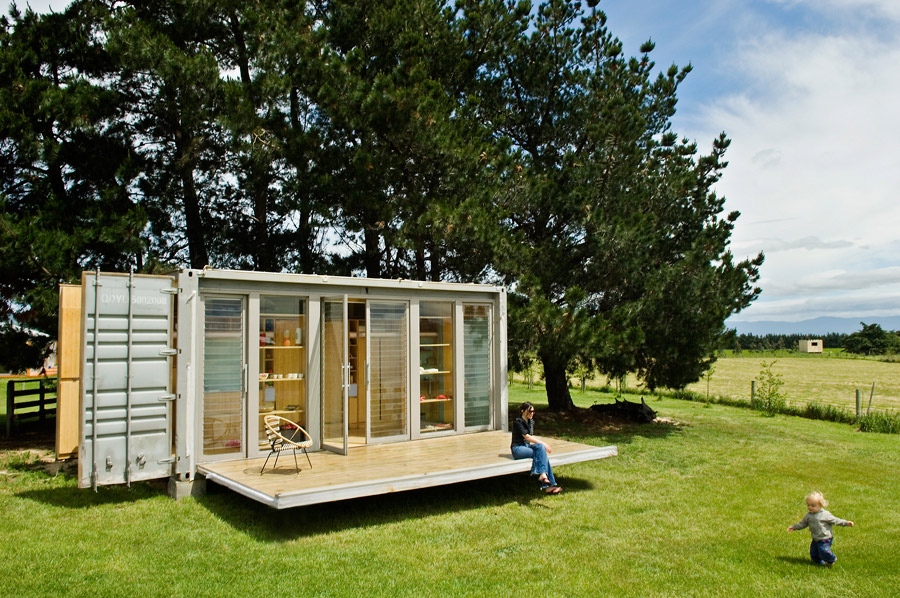
Container Homes


Tiny container home complete with retractable deck in New Plymouth, New Zealand. Photos by Paul McCredie. Designed by Atelierworkshop. More info.here.


The Beauty of Pollination


Lovely Video.   Some of the finest photography you will ever see.


WW II Photos


The scene in Berlin's Republic Square, before the ruined Reichstag Building, on September 9, 1948, as Anti-Communists, estimated at a quarter of a million, scream their opposition to Communism. At the time, the Soviet Union was enforcing the Berlin Blockade, blocking Allied access to the parts of Berlin under Allied control. In response, Allies began the Berlin Airlift until the Soviets lifted the blockade in 1949, and East Germany and West Germany were established. When the meeting pictured here broke up, a series of incidents between Anti-Red Germans and Soviet troops brought tension to a fever pitch as shootings took place, resulting in the deaths of two Germans.(AP-Photo) # 
In March of 1974, some 29 years after the official end of World War II, Hiroo Onoda, a former Japanese Army intelligence officer, walks out of the jungle of Lubang Island in the Philippines, where he was finally relieved of duty. He handed over his sword (hanging from his hip in photo), his rifle, ammunition and several hand grenades. Onoda had been sent to Lubang Island in December of 1944 to join an existing group of soldiers and hamper any enemy attacks. Allied forces overtook the island just a few months later, capturing or killing all but Onoda and three other Japanese soldiers. The four ran into the hills and began a decades-long insurgency extending well past the end of the war. Several times they found or were handed leaflets notifying them that the war had ended, but they refused to believe it. In 1950, one of the soldiers turned himself in to Philippine authorities. By 1972, Onoda's two other compatriots were dead, killed during guerrilla activities, leaving Onoda alone. In 1974, Onoda met a Japanese college dropout, Norio Suzuki, who was traveling the world, and through their friendship, Onoda's former commanding officer was located and flew to Lubang Island to formally relieve Onoda of duty, and bring him home to Japan. Over the years, the small group had killed some 30 Filipinos in various attacks, but Onoda ended up going free, after he received a pardon from President Ferdinand Marcos. (AP Photo) #


Northern Lights Over Teepees


A Bit Cold


Absolutely Beautiful!!!!!!!

NORTHERN LIGHTS, YELLOW KNIFE, CANADA

Thanks to Mirjana Bartl Sampos for sharing.


Free E-book "Readings in Urban Planning and Design"

Readings in Urban Planning and Design This manuscript expands upon, and compliments, chapters in the book “Planning Connections – Human, Nat...