From https://www.thebulwark.com/, an excellent site.
Housing
Slow Boring Matt Yglesias https://www.slowboring.com/ looks at county-level maps of population decline, which is a little like peering into a crystal ball:
He notes: “[T]he issue in the contemporary United States is that the average growth rate is very low. Fully 47% of counties lost population between July 2021 and July 2022.”
An interesting corollary to this fact touches on one of my hobby horses: housing.
One big problem with population decline is that it makes houses too cheap. I know, I know, I’m normally talking about how it’s bad when regulatory barriers make houses too expensive. But it’s also bad for houses to be too cheap.
Why? A concept I learned about years ago from urban economist Issi Romem and that I wish was in wider circulation is the idea of the market price of housing vs. the replacement cost of a house. The market price is obvious: if you put your house up for sale tomorrow, how much could you get for it? The replacement cost is what it would cost if a tornado demolished your house tomorrow and you had to rebuild it from scratch. . . .
In a scenario of population decline, though, the market value of a house falls below the replacement value of the structures. You can see this by looking at statistics, but it’s pretty easy to eyeball where it’s taking place because the signature is a neighborhood with more vacant lots or vacant buildings than ongoing construction projects. Huge swathes of Detroit are, infamously, like this. But it’s also true of Cleveland and St. Louis and Milwaukee and Baltimore and other cities. Abandoned or vacant buildings are a source of blight — negative amenity value to the neighborhood. And each city with a significant amount of vacant property has its own policy apparatus for dealing with it and its own local discourse about the merits of that apparatus and whether the problem should be handled some other way. In years of reading about this, though, I’ve never heard of a city that has a magic formula to deal with vacant lots and blight. What I have seen is the vacant building problem vanish in my own neighborhood in D.C. due to robust market demand for housing. I’ve also seen in Chicago that a city can be capacious enough to support a lot of construction activity in the West Loop, even while significant swathes of the South Side look a lot like Cleveland.
Read the whole thing.
________________
The cost of housing in much of the USA is a major concern. In the high growth "hot areas" housing costs are too high.
One way for a person to get affordable housing is to move to one of the many counties where population growth and the cost of housing is relatively low. This works best for people who have a pension and people who can work from home.
You want a nice area with little congestion or traffic. A good location is in a low growth low cost area that also has a University or College, which means that there will be interesting things to do nearby.
The four counties or cities below area areas where I have lived recently, and show the average cost of a home from Zillow.com. The costs are not as high as California or New York, but still higher than the national average
Manatee County 445,000 Bradenton 384,526
Sarasota County 462,500 Sarasota City 454,834
Cook County 285,000
Lake County 294,000
Will County 290,000
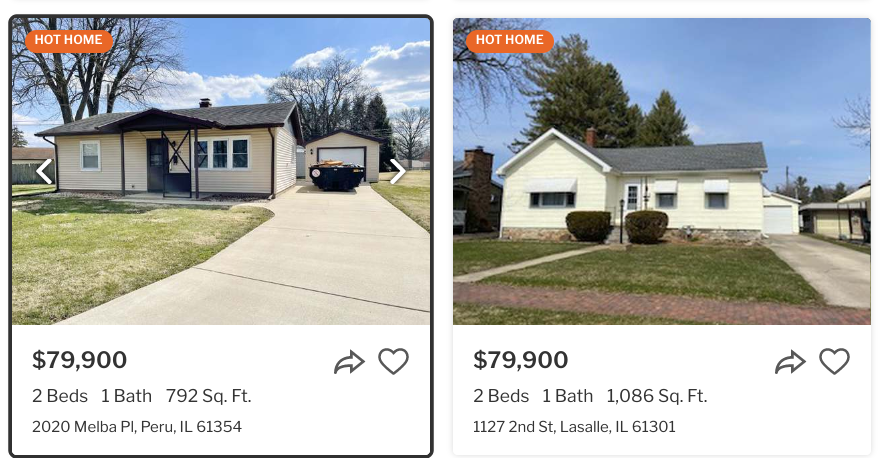
The Counties and cities below are lower cost counties in Illinois. As you can see home prices are much lower.
Lasalle County 156,000
Peoria County 119,643
Fulton County 94,011
Macomb 91,161
Macomb is a nice rural community in western Illinois and home to Western Illinois University. As you can see, homes are affordable. One also wants to check crime rates.
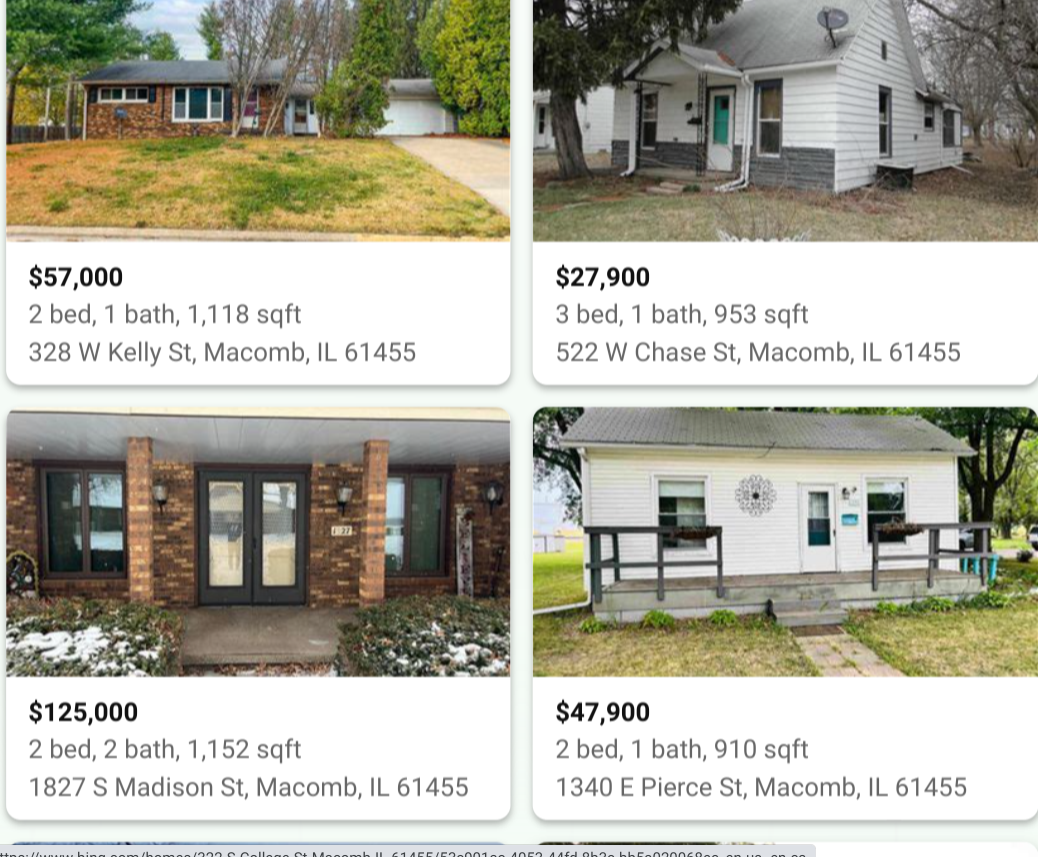


Macomb
https://www.bing.com/homes/map?q=homes%20for%20sale%20maccomb%20il&filters=tsource:%22realestate%22%20gscountry:%22VVNB%22%20RealEstateMarket:%22en-us--en-ca%22%20subsegment:%22houses%22%20segment:%22generic.carousel%22%20catguid:%22084A2E71-0952-451E-B247-C6BC2CF5B211_00000000DF3A4440-00000020FDAA56C0-SH-TWFjb21i%22%20secq:%22homes%20for%20sale%20maccomb%20il%22%20supwlcar:%220%22%20ctype:%220%22%20eltypedim1:%22House%22%20mltype:%220%22
Some other affordable areas in Illinois.
References
Zillow.com
https://www.redfin.com/county/476/FL/Manatee-County/housing-market
https://www.redfin.com/county/494/FL/Sarasota-County/housing-market
https://www.redfin.com/county/727/IL/Cook-County/housing-market
https://www.redfin.com/county/810/IL/Will-County/housing-market


.jpg)